The readiness score is the first thing many of you check in the morning, and it's also the number we get the most feedback on. Three things kept coming back in your messages. On a planned rest day, the score could read lower than your body felt, because the plan weighed in. The number could shift during the day as data trickled in. And how you feel, the thing you know best, deserved more weight than it was getting.
All three were fair. Readiness Score 2.0 is built around them.
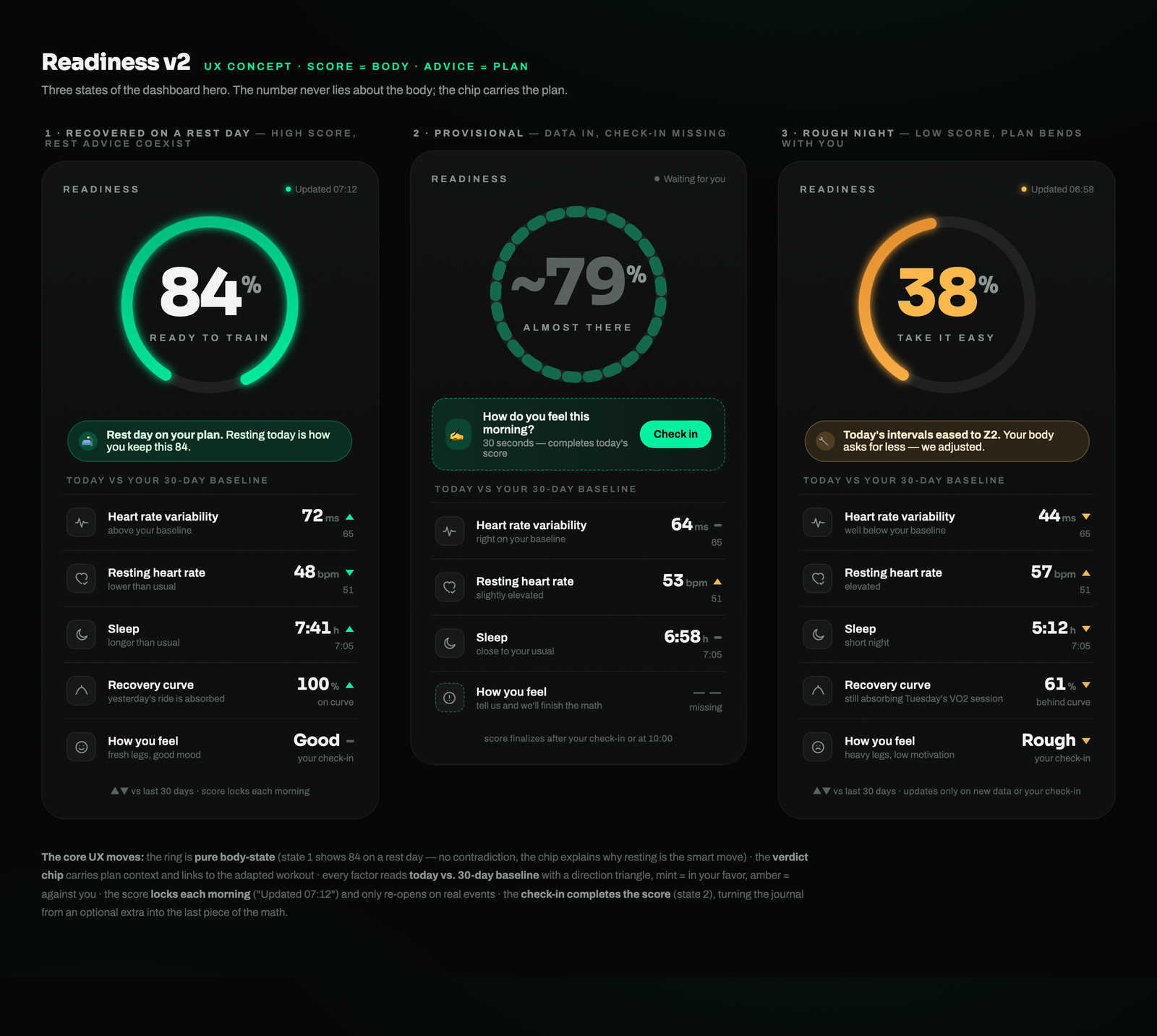
The score is now your body, nothing else
The score used to answer two questions at once: how recovered is your body, and what should you do today. Useful, until the two disagreed, like a rest day when you woke up feeling fresh. So we split the jobs, and the score now measures one thing: your body.
It's built from signals that describe your physical state, each compared against your own 30-day baseline:
- Heart rate variability: today versus your normal, not versus some population average
- Resting heart rate: elevated above your baseline pulls the score down, sitting below it helps
- Sleep: last night against what your body is used to
- Recovery curve: where you are on your personal recovery timeline after recent hard sessions. Fitter athletes clear training stress faster, and your curve knows that about you
- Morning check-in: how you say you feel is a full factor, weighted alongside sleep
Each factor shows its own row: today's value, your baseline, and an arrow telling you whether it's working for you or against you. When the number surprises you, one tap shows exactly why.
Your training plan, rest days, races, taper weeks: none of it touches the number anymore. A rest day with a recovered body now shows a high score, which is exactly what a rest day is supposed to produce.
Advice gets its own place
The plan didn't disappear, it moved. Your daily outlook still tells you what we're doing about today: "Rest day, let it land." "We eased today's intervals to Zone 2." "All clear for intensity." That advice keeps using everything, your form, your schedule, tomorrow's race, because advice should know your plan. The score tells you where your body is; the outlook tells you what to do with it.
If your body says 84 and the plan says rest, you'll now see both, and both will be true.
One score per day
You told us the score could move during the day while nothing about your body changed. The new score anchors: once your morning data is in, it locks and shows when it was set. It only moves again for a real reason, like submitting your check-in or genuinely new recovery data landing mid-day after a ride.
Before your data is complete, you'll see a provisional score, dimmed, with a tilde: our best estimate so far. Fill in your 30-second morning check-in and it firms up on the spot.
How you feel counts, wherever you log it
The morning check-in is now a full factor in the score. And you don't have to do it in our app: if you already log soreness, fatigue, stress, mood or motivation in Intervals.icu, those count as your check-in, and we won't ask you the same questions twice. Reporting an injury caps the score no matter how good the wearable data looks, because a great HRV doesn't fix a bad knee.
No wearable? You still get a real score
Not everyone sends HRV and resting heart rate to their account. For those athletes the score is now built from the signals that are there, each shown as its own factor: your recovery curve, your morning check-in, and your accumulated training fatigue. The check-in carries more weight in that mix, because it's the best morning signal you have.
And when there's genuinely nothing to go on yet, no recovery history, no check-in, we simply show no number until there is, with a nudge on how to unlock your daily score. We'd rather ask you to check in than guess.
Where this lands
Readiness Score 2.0 is live today, everywhere: the web dashboard shows the full experience with factor rows, the advice next to it, and the "updated at" stamp, and the iPhone and Android apps show the new score immediately, with the factor breakdown arriving in the current app updates. The same score flows through to your daily briefing email and Coach+ conversations.
This one came straight from your feedback. If you've ever looked at a low number on a rest day and thought "but I feel great": you were right, and now the score agrees. Keep the feedback coming.
— Martijn